

Citizenship by Investment Market Set for Structural Shift by 2030, Passportivity Report Finds
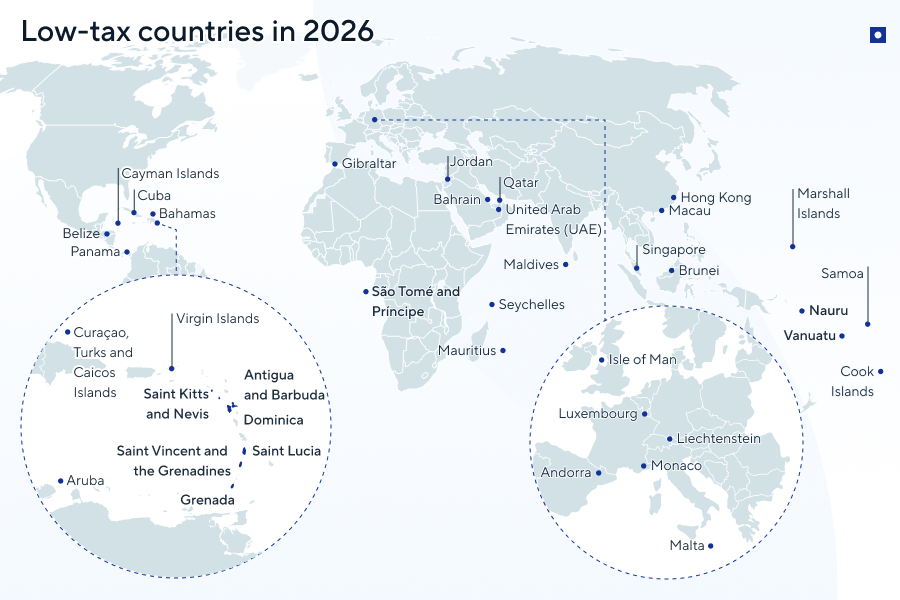
Some countries considered “tax havens” offer citizenship by investment. These include five Caribbean countries, São Tomé and Príncipe, Nauru, and Vanuatu
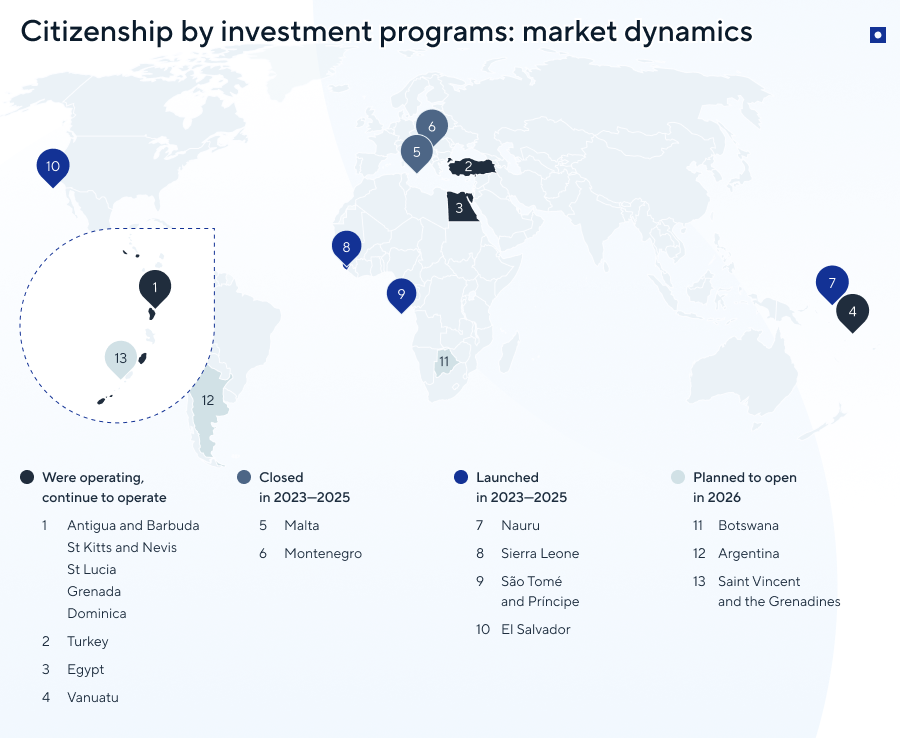
The map shows active, closed, and upcoming citizenship by investment programmes worldwide
According to a new report by Passportivity, demand for second citizenship is expected to remain strong through 2030, particularly among high-net-worth individuals and globally mobile families from the United States and Canada, while programme structures and geographic focus continue to evolve.
Once seen primarily as a tool for visa-free travel, citizenship by investment is now increasingly used as a risk management strategy. Investors rely on second passports to maintain access to international banking systems, diversify geopolitical exposure, and secure long-term options for their families.
From status symbol to strategic asset
The report highlights a fundamental shift in investor behaviour. Applicants are no longer guided solely by passport strength or the number of visa-free destinations. Instead, they prioritise:
1. Speed of obtaining citizenship;
2. Total investment cost;
3. No residence requirements;
4. Inclusion of family members;
5. Tax optimisation opportunities;
6. Flexibility in global mobility and banking access.
Among investors from the US and Canada, these priorities are increasingly linked to long-term wealth planning. Citizenship by investment is being treated less as a lifestyle purchase and more as a strategic asset that can support intergenerational planning, access to new markets, and greater resilience in a less predictable global environment.
Global market expansion beyond traditional regions
Historically, the Caribbean dominated the citizenship by investment market. While these programmes remain among the most popular, the geography of supply is rapidly expanding.
According to the Passportivity report, new programmes have been launched or announced in:
Africa — including Sierra Leone and São Tomé and Príncipe;
Oceania — including Nauru;
Latin America — with Argentina expected to launch a programme;
Caribbean — with additional countries preparing to enter the market.
This expansion reflects growing competition among governments seeking to attract foreign capital. At the same time, stricter regulations in established markets are pushing investors to explore alternative jurisdictions.
Regulatory pressure reshapes the industry
One of the most significant developments affecting citizenship by investment is increasing regulatory pressure, particularly from the European Union.
By 2025, all European citizenship-by-investment programmes had been closed following legal rulings that such schemes conflict with EU law. This has effectively removed Europe from the global investment citizenship map and redirected demand toward other regions.
At the same time, Caribbean countries have begun harmonising their programmes. Minimum investment thresholds have been standardised, and additional compliance measures introduced, including enhanced Due Diligence and, in some cases, residence requirements.
Key drivers of demand in 2026
The report identifies several factors sustaining demand for citizenship by investment.
1. Geopolitical instability. Rising global tensions and regional conflicts are prompting high-net-worth individuals to secure alternative citizenship options as a form of protection.
2. Tax and regulatory changes. Reforms in major economies, including the removal of favourable tax regimes, are driving wealthy individuals to seek more flexible jurisdictions.
3. Banking access and compliance. Holding multiple citizenships simplifies Due Diligence checks and reduces the risk of account restrictions in international financial institutions.
4. Family and long-term planning. Investors increasingly view second citizenship as a tool for securing education, healthcare, and long-term residence options for their children.
For investors in North America, these drivers are especially relevant in the context of rising political polarisation, evolving tax rules, and growing interest in contingency planning. Many American and Canadian families are no longer looking only for mobility, but for a credible “Plan B” that supports wealth preservation and future relocation flexibility.
Comparison of citizenship by investment programmes
Passportivity compares citizenship by investment programmes worldwide to reflect the diversity of available options, evaluating:
1. Minimum investment thresholds;
2. Processing timeframes;
3. Residence requirements;
4. Eligibility for family members;
5. Available investment routes.
This comparative approach highlights the growing divergence between programmes in terms of accessibility, speed, and long-term value.
Market outlook: what will change by 2030
Looking ahead, Passportivity analysts expect several structural trends to define the future of citizenship by the investment industry.
1. Tighter compliance and Due Diligence. Governments will continue to strengthen applicant screening procedures and require clearer links between investors and the host country.
2. Shift toward emerging markets. New programmes in Africa and developing economies are expected to gain market share due to lower entry thresholds and faster processing.
3. Growth of multi-status strategies. Investors will increasingly combine citizenship and residence permits across multiple jurisdictions to optimise mobility, taxation, and business operations.
4. Rise of impact-based investment models. Countries are beginning to link citizenship to contributions in areas such as infrastructure, sustainability, and climate resilience, moving away from purely transactional models.
About Passportivity
Passportivity is an international law company specialising in residence- and citizenship-by-investment solutions. The company supports investors, entrepreneurs, and families, including clients from the United States and Canada, seeking second residency or citizenship options as part of broader mobility, tax, and legacy planning.
Passportivity’s services include legal structuring, Due Diligence, programme selection, and full support throughout the application process across Europe and other jurisdictions. The company works with licensed lawyers and qualified professionals to ensure compliance, transparency, and strategic alignment with each client’s long-term goals.
Elena Dukach
Passportivity
+971 52 318 2355
office@passportivity.com
Legal Disclaimer:
EIN Presswire provides this news content "as is" without warranty of any kind. We do not accept any responsibility or liability for the accuracy, content, images, videos, licenses, completeness, legality, or reliability of the information contained in this article. If you have any complaints or copyright issues related to this article, kindly contact the author above.
